
Meccano vs Lego Technic (2026): Which Is Actually Worth Your Money?
Meccano vs Lego Technic Which Is Actually Worth Your Money in 2026?
Two of the most respected engineering construction toys in the world - but built on completely different philosophies. Meccano uses real metal and real tools. Lego Technic uses precision plastic and modular connectors. This page tells you exactly which one is right for you and why - based on 25 years of building with both. If you are mainly looking for the best Meccano set to buy rather than this comparison, see the best Meccano sets guide.
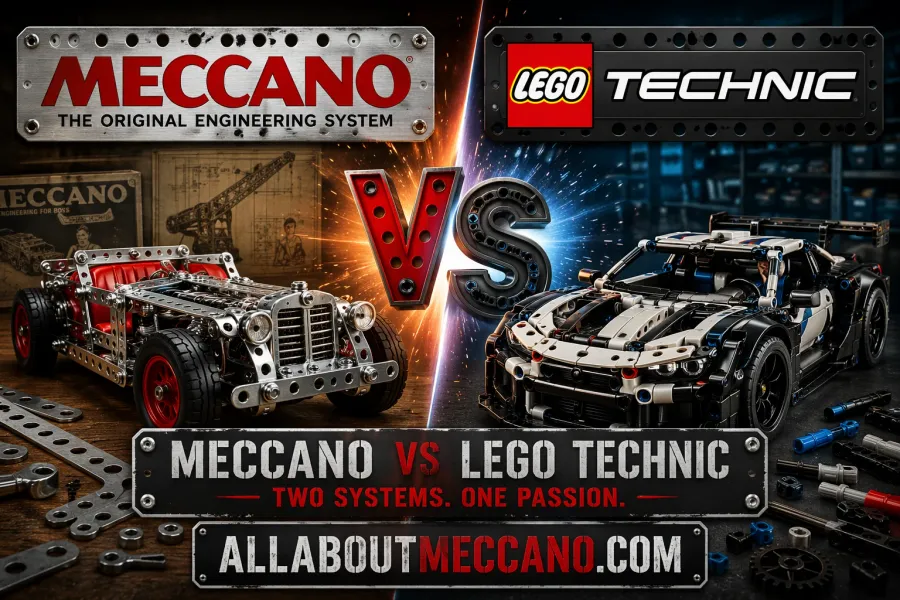
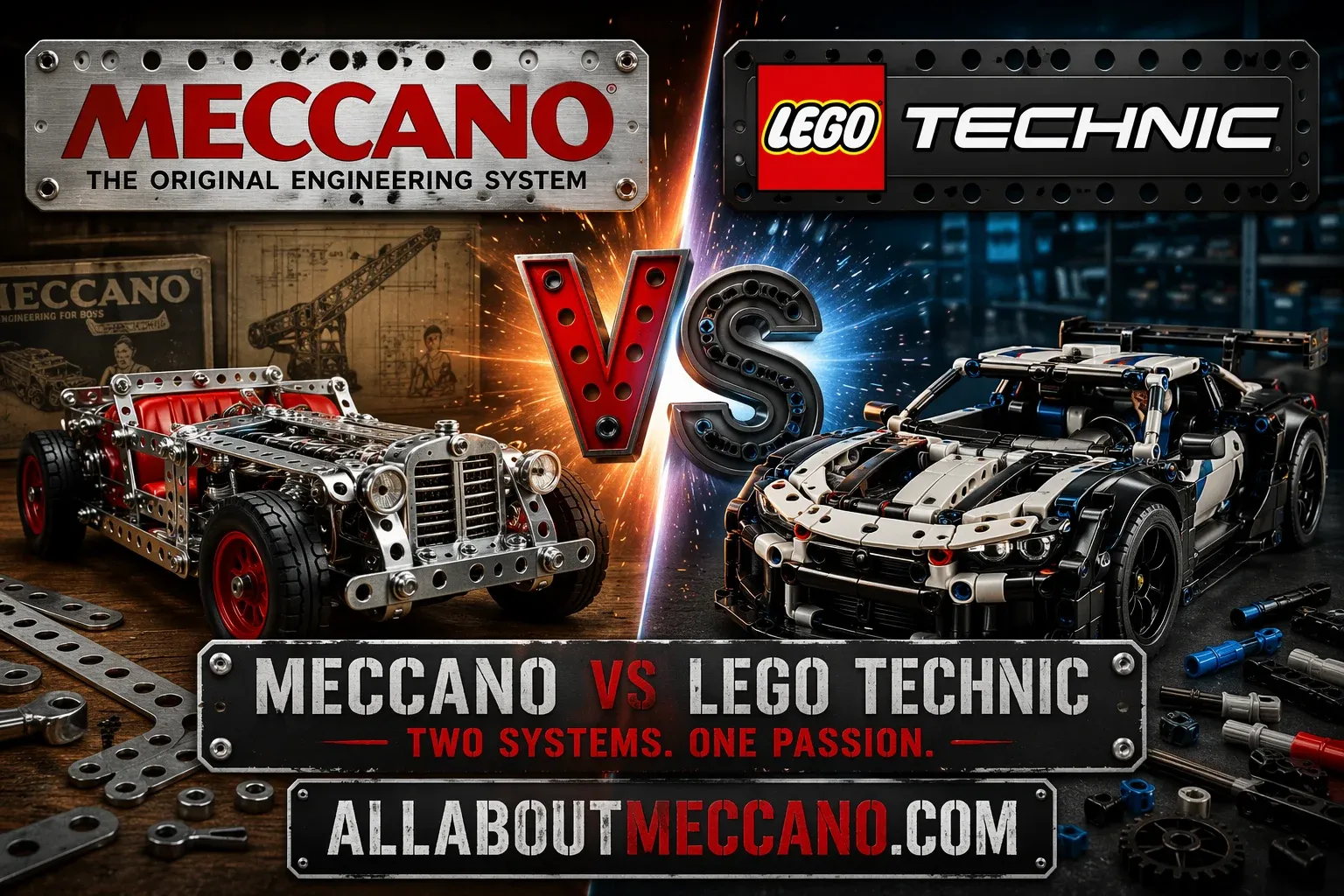
Meccano vs Lego Technic: comparing real metal engineering and precision plastic building systems side by side
For most adult builders and serious engineers, Meccano is the better choice - real metal parts, genuine fasteners, and a mechanical system that teaches how machines actually work under load. Lego Technic is the better choice if you want faster builds, cleaner aesthetics, and a larger selection of themed sets. Both are excellent but they serve different builders. For a broader look at how Meccano compares across its own range, see the best Meccano sets guide.
Not sure which Meccano set to buy? See the full Meccano buying guide or the best mechanical engineering kits for adults.
| Feature | Meccano | Lego Technic |
|---|---|---|
| Material | Real metal strips and plates | High-quality ABS plastic |
| Fastening system | Real nuts, bolts, screws | Modular clip connectors |
| Build speed | Slower, more deliberate | Faster, more intuitive |
| Motor compatibility | Rigid mounts, handles real torque | Good but plastic flex under load |
| Gear alignment | Precise and predictable | Good, occasionally shifts |
| Durability | Decades - metal does not break | Long-lasting but clips wear |
| Part variety | Focused range | Enormous selection |
| Expandability | Excellent - standardized system | Good within Technic range |
| Learning curve | Steeper - real tools needed | Gentler - no tools required |
| Mechanical teaching value | Explains how machines work | Shows what machines look like |
| Best age range | 8 to adult (serious builders) | 7 to adult (broader appeal) |
| Price range | Mid range | Mid to high range |
1 Different Origins, Different Philosophies History
Meccano was invented in Liverpool in 1898 by Frank Hornby as an educational tool for teaching engineering principles to children and adults. The system was built around real mechanical concepts from the start - standardized hole spacing, metal strips that could carry load, and fasteners that worked exactly like those used in real machines. For a full timeline see our Meccano history article. For a full breakdown of how Meccano and Erector sit within the same system today, see the Erector vs Meccano guide.
Lego Technic arrived in 1977 as a step up from standard Lego bricks, adding axles, gears, and pneumatics to the plastic system. The focus was on building models that looked and moved like real machines rather than teaching the underlying mechanical principles. Technic has since grown into one of the most popular construction toy ranges in the world, with licensed sets covering everything from Bugatti supercars to NASA rockets.
Those founding philosophies still define both systems today. Meccano asks you to understand what you are building. Lego Technic asks you to follow instructions and enjoy the result. Neither approach is wrong - they simply attract different kinds of builders.
For an independent perspective on how construction toys develop engineering thinking, the Science Museum Group has documented how metal construction systems shaped engineering education across generations. Research on hands-on STEM activities, including work highlighted by the National Science Foundation, has linked construction play with skills such as spatial reasoning and problem-solving.
2 Metal vs Plastic - What It Means in Practice Materials
This is the most fundamental difference between the two systems and the one that matters most once you move beyond simple builds.
Meccano's metal strips and plates carry real load. When you build a frame and put weight on it, the metal transmits force in ways that reveal structural weaknesses you can actually fix. Axles stay aligned. Motors mount rigidly. A Meccano build from 1965 is still fully functional today because metal does not degrade the way plastic does over time.
Lego Technic plastic is high quality and durable, but it behaves differently under stress. Clips and connectors wear slightly with repeated assembly and disassembly. Under heavy motor loads, frames can flex in ways that shift gear alignment. For static display builds or lighter mechanisms, this never matters. For complex motorized machines with real torque demands, it becomes noticeable.
The practical difference: if you want to understand why a machine works, Meccano's metal forces you to learn. If you want to build a model that looks and moves like a real machine without that deeper mechanical engagement, Lego Technic delivers a more polished result faster. For the best current Meccano metal sets available, see the full ranked guide.
3 Motors, Gears and Mechanical Reality Performance
Both systems support motorized builds. Both produce models that move impressively. The difference shows up once you push them harder - longer gear trains, heavier loads, more complex drivetrains.
In Meccano, the metal frame absorbs motor torque rather than flexing under it. Gear alignment stays predictable across multiple mesh points. You can build long axle runs with multiple bearing supports that stay true. When something goes wrong, the failure tells you exactly why - a loose bolt, a misaligned gear, a frame that needs bracing. That feedback loop is the entire educational value of the system.
In Lego Technic, motors work extremely well within the designed parameters of each set. The system has been refined over 45 years and the official motorized sets are genuinely impressive. Where it differs from Meccano is in free-form motorized building - designing your own drivetrain rather than following instructions. The plastic connectors give less precise feedback when something is misaligned, which makes diagnosis harder.
For the full breakdown of Meccano motor and gear troubleshooting, including how to diagnose and fix drivetrain problems, that guide covers it in detail.
4 Full Feature Comparison Infographic
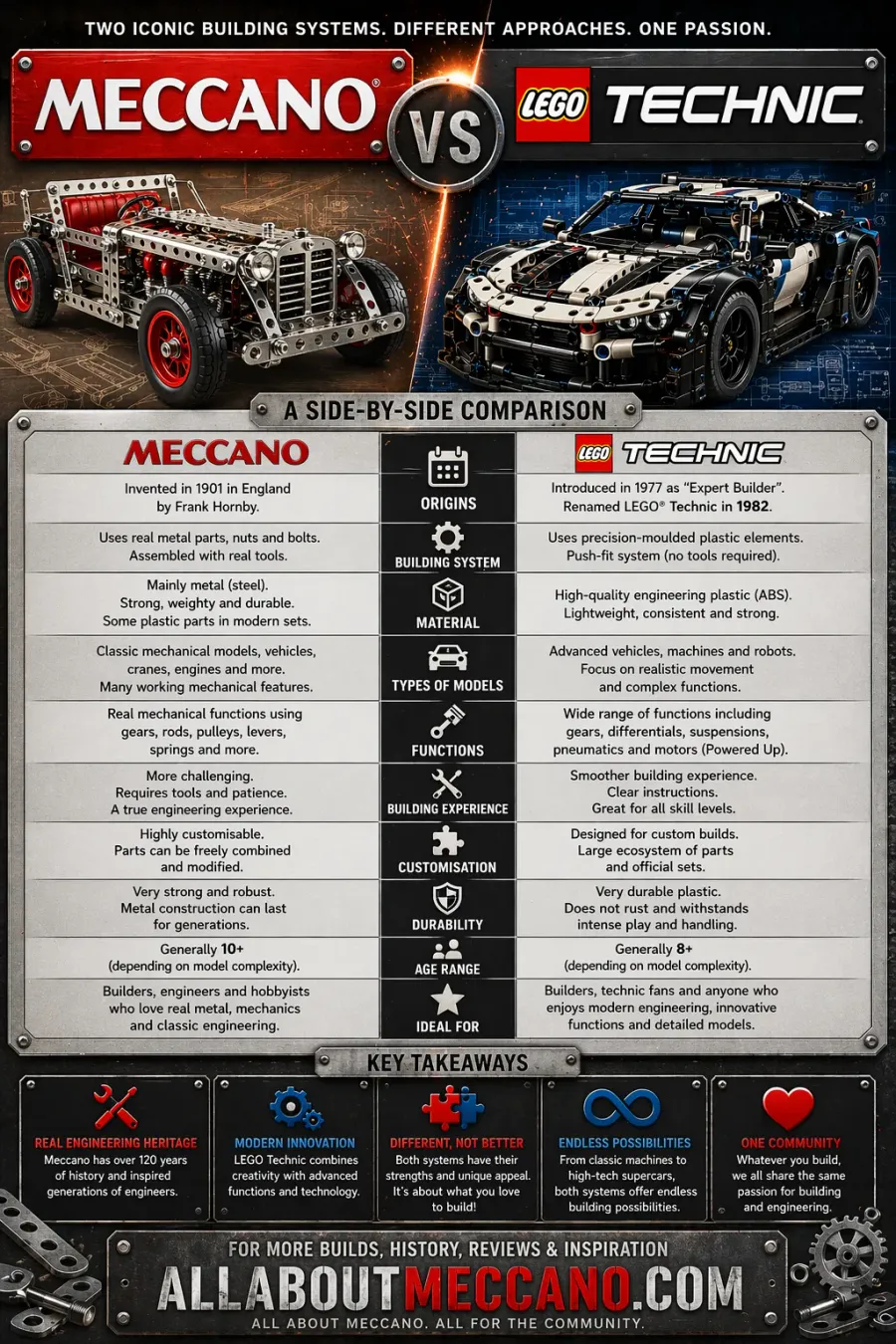
Complete infographic comparing Meccano and Lego Technic: materials, mechanics, durability and building experience
5 Who Should Buy Which? Verdict
- You want real metal parts and real tools
- Motors, gears, and torque matter to you
- You enjoy understanding why machines work
- You want builds that last decades
- You are an adult builder or serious hobbyist
- You want to expand and modify freely
- You want faster builds without tools
- You prefer licensed themed sets
- You are buying for a younger builder (7 to 10)
- Finished aesthetics matter as much as mechanics
- You want a larger variety of available sets
- You prefer clear step-by-step instructions
Both systems are worth owning. Many serious builders have both - Lego Technic for polished display models, Meccano for free-form mechanical experimentation. If you can only choose one and you care about engineering depth, Meccano wins. If you want the most satisfying out-of-the-box experience with the widest set selection, Lego Technic wins. See the best Meccano sets guide for specific recommendations across all age groups.
6 Best Sets to Buy Right Now August 2026
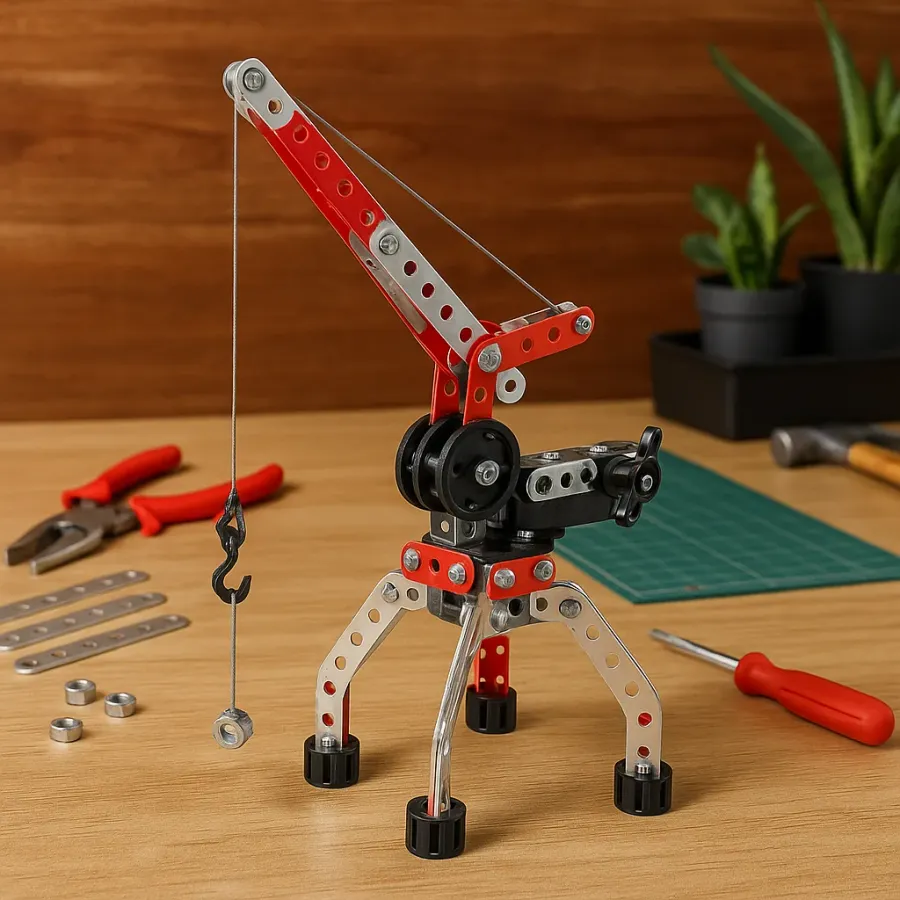
600+ metal parts, 6V motor, 25 motorized builds. The best all-round Meccano set for adults and experienced builders aged 10 and up. Real tools, real metal, real engineering challenge.
★ See Today's Amazon PriceAs an Amazon Associate, we earn from qualifying purchases.
Precision plastic construction with gears, axles, and motors. Polished, realistic models with clear step-by-step instructions - the best entry point for builders who prefer plastic over metal.
★ Check Price on AmazonAs an Amazon Associate, we earn from qualifying purchases.Do you want tools?
Meccano requires real tools - a screwdriver and wrench. If that sounds satisfying, Meccano. If that sounds like a barrier, Technic.
Motor complexity?
Both support motors. Meccano's rigid metal construction can be advantageous for custom builds where frame rigidity and mechanical load matter. Technic has a larger range of official motorized sets.
Who is it for?
Ages 7 to 10: Lego Technic is more accessible. Ages 10 and up or adults who want depth: Meccano is the stronger system.
Budget?
Both sit in a similar price range. Meccano tends to offer more parts per pound at the mid range. Lego Technic premium sets cost significantly more.
? Frequently Asked Questions
Where to Buy in 2026
Both Meccano and Lego Technic are available on Amazon with competitive pricing. Use the product cards above to check current prices before buying.
For more Meccano options browse our complete Meccano shop, see the best Meccano sets guide, or check current deals.